Steam Deck vs Switch 2 vs ROG Xbox Ally: Which One Survives a 15-Minute Window?
Disclosure: As an Amazon Associate I earn from qualifying purchases. This page may also contain other affiliate links. If you buy something through a link here, we may earn a commission at no extra cost to you. We only recommend products we've researched and believe are genuinely useful. See ourprivacy policy for details.
You don’t get two-hour gaming sessions anymore. You get naptime, or the 15 minutes after the kid finally goes down, or a stoplight-length window before someone calls your name.
That changes what “best handheld” even means. It’s not about who pushes more frames. It’s about who wakes up fast, every single time, without eating battery while it sits in your bag.
The pick: for short, interrupted sessions, the Steam Deck is built around exactly this problem from day one.
The Picks
- Steam Deck: best sleep/resume reliability, dedicated suspend button, built for exactly this use case.
- Nintendo Switch 2: best if you need Nintendo’s own games and want the gold-standard “close the lid, open it later” habit people already trust.
- ASUS ROG Xbox Ally: best if your library lives on Game Pass or PC, but budget extra steps to manage sleep.
How Each One Handles Sleep and Resume
Steam Deck: built for interruption from the start
Valve designed the Steam Deck around suspend and resume as a core feature, not an afterthought. There’s a dedicated power/sleep button, and the whole system is meant to be picked up and put down constantly.
This isn’t just marketing. After a system update in 2022, modder Peter “Durante” Thoman publicly reported that resuming from sleep took only about a second or two (as covered by PCGamesN and TechRaptor). That’s close to instant in real-world terms.
Battery on the OLED model is rated at 50Whr, which Valve says translates to roughly 3 to 12 hours of play depending on the game. The range is wide because demanding games pull a lot more power than lighter ones.
A few things worth knowing before you commit:
- It’s sold only through Steam, no retail boxes at other outlets.
- Your library is your existing Steam library. If you already own PC games there, they just show up.
- There’s no exclusive first-party franchise tying you to it. It plays what you already play on PC.
For a dad who wants to close the lid mid-boss-fight and reopen it after bedtime without thinking twice, this is the safest bet of the three.
Nintendo Switch 2: the standard everyone else gets compared to
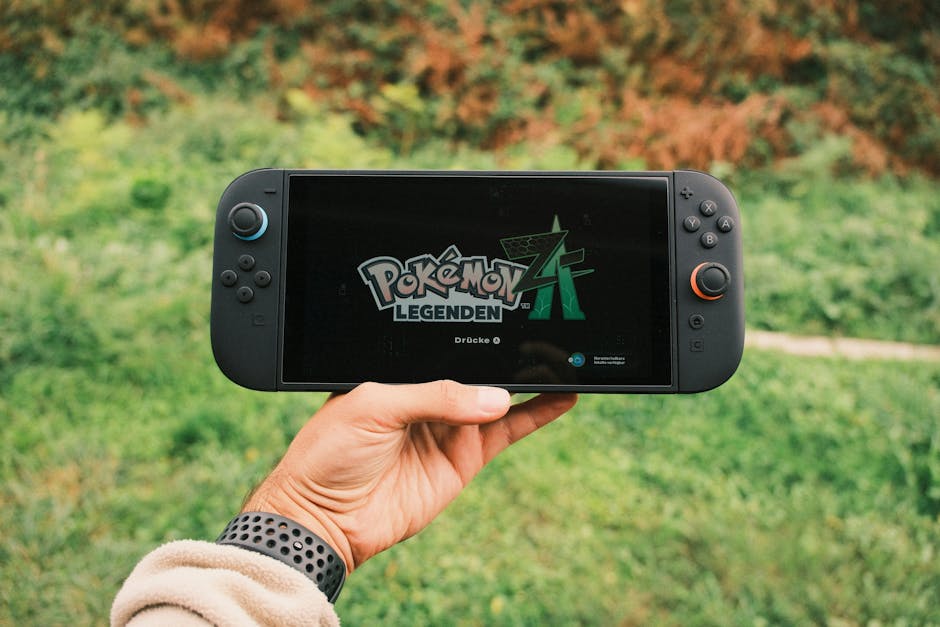
Nintendo Switch 2 is the only one of these three that plays Nintendo’s own first-party games, plus a library of compatible original Switch titles. That alone makes it the obvious pick if your household already has a pile of Switch games or your kid wants to play Mario with you.
On the sleep front, Switch owners have spent years treating “press the button, pick it up hours later, it’s exactly where you left it” as just how handhelds are supposed to work. That reputation didn’t come from nowhere. It’s the behavior other handhelds get measured against, including in this article.
Specs to know:
- 256GB of internal storage, expandable only with microSD Express cards (regular microSD cards won’t work).
- Battery life runs about 2 to 6.5 hours depending on the game, per Nintendo’s own numbers.
- Shared parenting duty is easy here too: handing off a one-press sleep device to your partner or older kid rarely causes confusion.
If your short windows need to be foolproof, including for a partner who isn’t the “gamer” in the house, this is the one with the least learning curve.
ASUS ROG Xbox Ally: huge library, but sleep needs babysitting
The ROG Xbox Ally is a Windows 11 handheld, which means it runs Xbox Game Pass, Steam, and Epic games all on one device. That’s an enormous library on paper, bigger than the other two combined if you count everything available across those storefronts.
Hardware-wise it’s a serious machine: a 7-inch 1080p 120Hz screen, AMD Ryzen Z2 A chip, 16GB of RAM, a 512GB SSD, and a 60Wh battery according to its listing. On paper that’s the most capable device of the three.
Here’s the catch for the 15-minute-window dad. In February 2026, the site retrohandhelds.gg reported that Windows’ standard sleep mode kept draining the ROG Xbox Ally’s battery even while it sat untouched in a bag. The reviewer’s fix was switching to Hibernate instead of Sleep, which solved the drain but added about a 15-second wait to wake the device back up.
Treat that as one reviewer’s real experience, not a guaranteed result for every unit or every Windows update. Windows handhelds are still catching up to the single-purpose suspend systems that Valve and Nintendo built from scratch. If you go this route, expect to spend a little time in power settings getting sleep behavior dialed in, and don’t assume it will behave like a game console the first time you pull it out of a bag.
The Bottom Line
For short, constantly interrupted sessions, judge these three on wake reliability first and game library second. The Steam Deck was built around suspend and resume from day one and has a documented track record of waking up in a second or two. The Switch 2 carries Nintendo’s long-standing reputation for one-press sleep that just works, plus it’s the only option for Nintendo’s own games. The ROG Xbox Ally gives you the widest game library of the three, but go in knowing you may need to swap to Hibernate and accept a slower wake to avoid battery drain in your bag.
If your gaming time really is measured in minutes, not hours, pick the device that disappears into the background between those minutes. That’s the real spec that matters here.